
ArticlesNo Comments

Introduction
Have you ever wondered how a rocket leaves Earth and soars into space? From the moment of ignition to achieving orbit, every second of a rocket’s journey involves complex physics, powerful engineering, and precise timing. In this article, we’ll break down how rockets work step by step, from ignition to orbit – in simple terms.
1. Pre-Launch Preparations
Before a rocket ever takes off, months of preparation go into ensuring a safe and successful launch.
- Fuel Loading: Cryogenic propellants (like liquid hydrogen and liquid oxygen) are carefully pumped into the rocket’s tanks just hours before liftoff.
- System Checks: Engineers verify guidance, navigation, control systems, and communication links.
- Countdown: A synchronized countdown ensures every system is ready at the exact launch moment.
2. Ignition – The Rocket Comes Alive
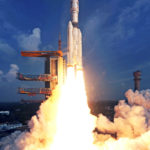
At T-0 seconds, the main engines ignite.
- Combustion: The rocket engine mixes fuel and oxidizer in the combustion chamber.
- Thrust Creation: The burning gases expand rapidly and are expelled through the nozzle at supersonic speeds.
- Newton’s Third Law: Every action has an equal and opposite reaction – so as gases push down, the rocket pushes upward.

This is the defining moment when immense chemical energy becomes motion – the birth of flight.
3. Liftoff – Overcoming Earth’s Gravity
Once engine thrust exceeds the rocket’s weight, the rocket begins to rise.
- Thrust > Weight = Liftoff
- Guidance Systems: Gyroscopes and computers keep the rocket upright and stable.
- Initial Ascent: The rocket climbs vertically to clear the dense lower atmosphere and avoid aerodynamic stress.
At this stage, the rocket consumes fuel rapidly – sometimes tons per second.
4. Stage Separation – Shedding the Dead Weight
Rockets are built in stages for efficiency. Each stage carries its own engines and fuel.
- When a stage runs out of fuel, it is jettisoned (detached and discarded).
- The next stage ignites immediately to continue accelerating the payload.
- This process dramatically improves efficiency, since the rocket no longer carries empty tanks.
Think of it like peeling layers of an onion – lighter, faster, higher.
5. Atmospheric Exit – Entering Space
Around 100 km above Earth, the rocket crosses the Kármán line – the recognized edge of space.
- The air is too thin for aerodynamic lift or drag.
- The rocket now moves purely in a vacuum.
- Small attitude thrusters handle orientation since aerodynamic fins no longer work.
At this point, the sky fades from blue to black, and Earth’s curvature becomes visible.
6. Orbital Insertion – Achieving Stable Orbit
Reaching space is not the same as staying there. To orbit Earth, the rocket (or its payload) must achieve orbital velocity – about 7.8 km/s (28,000 km/h) in low Earth orbit.
- The upper stage fires horizontally to increase sideways speed.
- Gravity tries to pull it down, but because it’s moving so fast, it keeps “falling around” Earth – this is orbit.
- Once the desired orbit is reached, engines shut down – this is called Main Engine Cut-Off (MECO).
At MECO, the payload – satellite, capsule, or space probe – is officially in orbit.
7. Payload Deployment
Finally, the fairing (protective nose cone) opens, and the payload separates.
- Satellites are deployed into their target orbits.
- Crew capsules prepare for docking or re-entry.
- The rocket’s upper stage may perform a disposal burn or deorbit maneuver to avoid space debris.

8. The Physics Behind It All
Rocket motion is governed by the Rocket Equation: \[\Delta v = v_e \ln\frac{m_0}{m_f}\]Where:
- \(\Delta v\) = change in velocity needed
- \(v_e\) = exhaust velocity of the gases
- \(m_0\) = initial mass (with fuel)
- \(m_f\) = final mass (after fuel burn)
This equation determines how much speed a rocket can gain for a given amount of fuel and efficiency.
9. Example: Falcon 9 to Orbit
Let’s see how this works with SpaceX’s Falcon 9:
- Stage 1: Burns kerosene + liquid oxygen for ~2.5 minutes, lifting the rocket to ~70 km.
- Stage Separation: Stage 1 returns for landing, while Stage 2 continues.
- Stage 2: Burns for another 6 minutes, pushing the payload to ~27,000 km/h.
- Orbit Achieved: Satellite is released; Stage 2 deorbits safely.

10. Beyond Orbit – Interplanetary Travel
To leave Earth orbit (for the Moon or Mars), a spacecraft must achieve escape velocity – about 11.2 km/s.
This is done using upper stages or space tugs that fire again to push the payload into a transfer orbit.
Conclusion
From the fiery ignition on the launch pad to the silent glide of a satellite in orbit, every rocket launch is a symphony of science and engineering.
Each stage – ignition, ascent, separation, and orbit – showcases the power of physics and human ingenuity that lets us explore beyond our home planet.
Rockets don’t just lift machines; they lift human curiosity toward the stars.
Be the first to post a comment.