
ArticlesNo Comments

Introduction
Have you ever looked at an airplane and wondered what all those parts actually do? Every section of an aircraft – from its nose to its tail—plays a crucial role in flight. Understanding these components is the first step toward learning how airplanes fly, how they stay stable, and how engineers design them for safety and efficiency.
In this article, we’ll explore the main parts of an airplane, their functions, and include simple labeled diagrams to make it easy to visualize.
Major Parts of an Airplane
Below are the key structural and aerodynamic components found in most fixed-wing aircraft:
| Part | Function |
|---|---|
| Fuselage | The central body of the aircraft that houses the cockpit, passengers, and cargo. It connects all other components. |
| Wings | Generate lift, allowing the airplane to rise and stay in the air. Their shape (airfoil) determines efficiency and maneuverability. |
| Empennage (Tail Section) | Provides stability and control. It includes the horizontal and vertical stabilizers, elevator, and rudder. |
| Engine(s) | Provide thrust to move the aircraft forward. Can be piston engines, turboprops, or jet engines depending on the aircraft type. |
| Landing Gear | Supports the aircraft during takeoff, landing, and taxiing. May be fixed or retractable. |
| Cockpit / Flight Deck | The control center where pilots operate the aircraft and monitor instruments. |
| Control Surfaces | Movable parts like ailerons, elevators, and rudders that control roll, pitch, and yaw. |
1. Fuselage – The Main Body
The fuselage is the backbone of the airplane.
It connects the wings, tail, and landing gear, while also accommodating passengers or cargo.
Functions:
- Houses cockpit, passengers, and cargo
- Provides aerodynamic shape to reduce drag
- Distributes structural loads from wings and tail
Common types:
- Truss-type: Metal tubing framework (used in light aircraft)
- Monocoque: Uses skin for strength
- Semi-monocoque: Combines both (common in modern airliners)


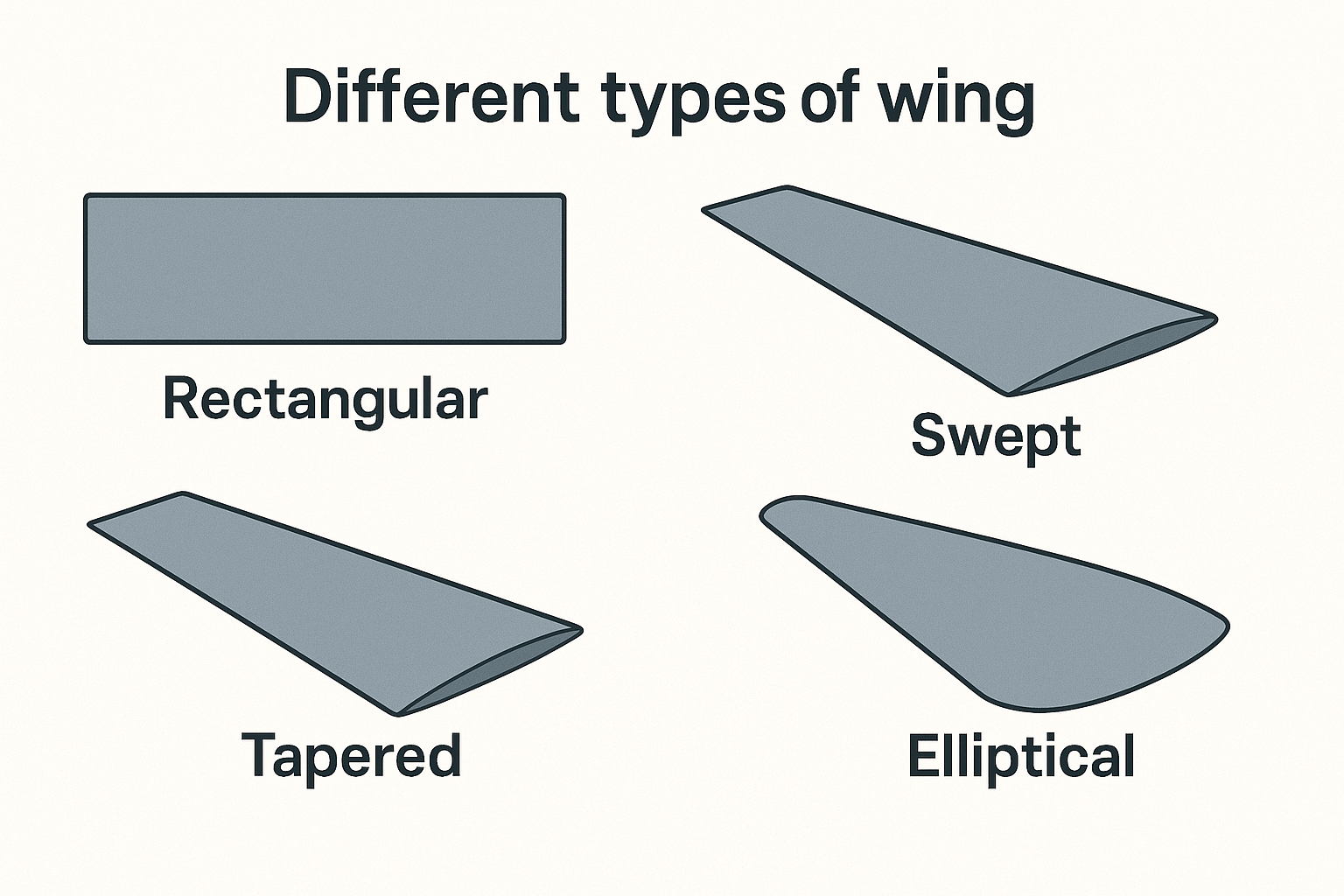
2. Wings – The Lift Producers
Wings are the most important part of an airplane for flight.
They are shaped like an airfoil, which allows air to move faster over the top surface, creating lower pressure and generating lift.
Key parts of the wing:
- Leading Edge: Front part where air first meets the wing
- Trailing Edge: Rear edge where airflow exits
- Ailerons: Control roll (banking left or right)
- Flaps: Increase lift and drag during takeoff and landing


3. Empennage (Tail Assembly)
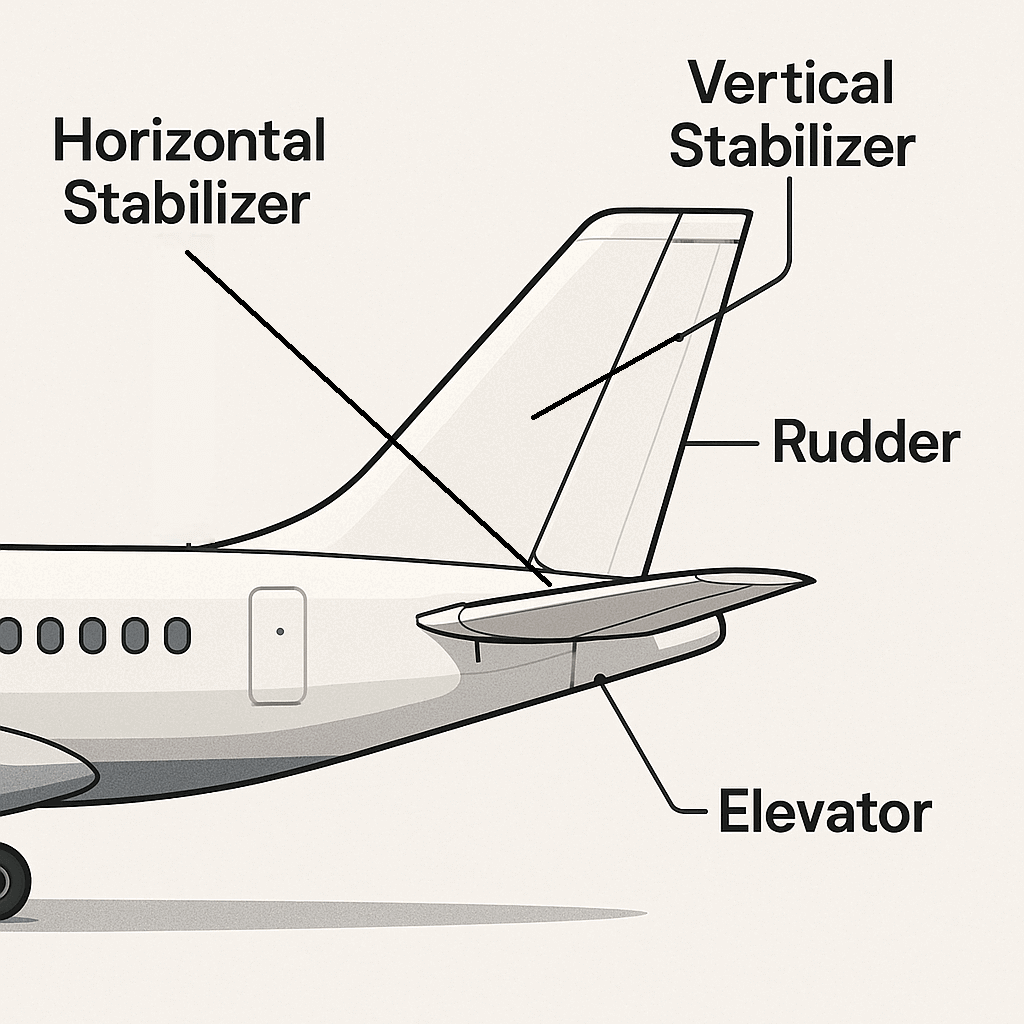
The empennage or tail section stabilizes the aircraft during flight.
Components:
- Horizontal Stabilizer: Prevents pitching up or down
- Elevator: Controls the pitch (nose up or down)
- Vertical Stabilizer (Fin): Prevents yaw (side movement)
- Rudder: Controls yaw (turning left or right)
4. Engines – The Power Source
Engines provide thrust, pushing the aircraft forward. The forward motion allows wings to generate lift.
Types of aircraft engines:
- Piston Engine (Propeller Driven) – Used in small aircraft
- Turboprop Engine – Combines turbine and propeller efficiency
- Jet Engine (Turbofan / Turbojet) – Used in modern airliners and fighter jets
Function: Converts fuel energy into thrust using air compression, combustion, and exhaust acceleration.
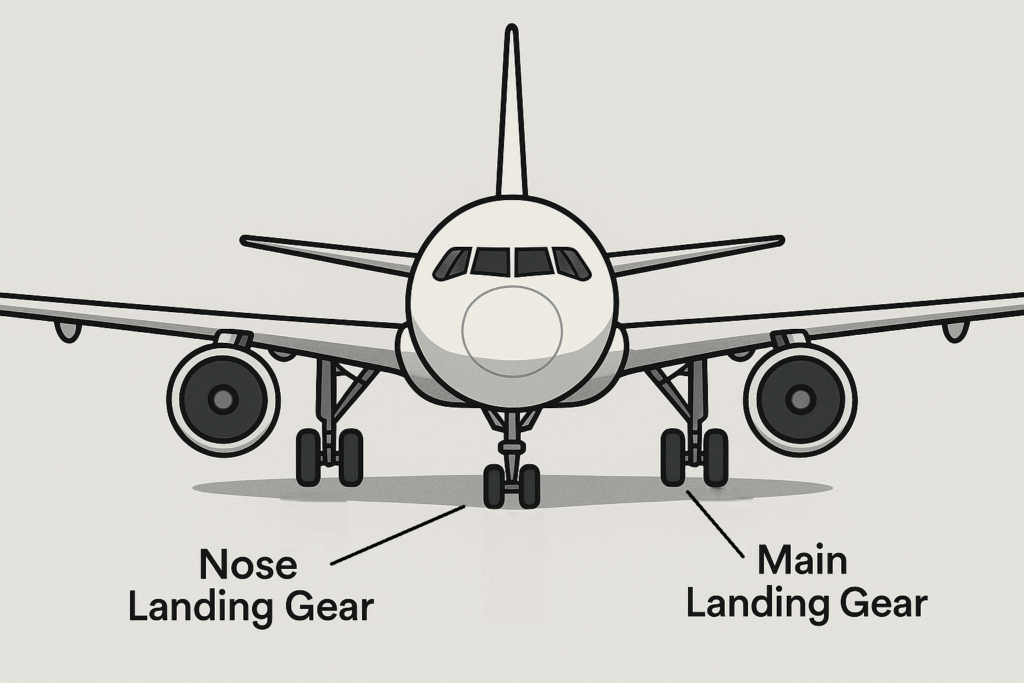
5. Landing Gear – The Support System
Landing gear supports the aircraft when it’s on the ground and absorbs shock during landing.
Types:
- Tricycle Type: Nose wheel + two main wheels (common)
- Taildragger: Rear wheel + two main wheels (used in older aircraft)
- Retractable Gear: Folds into the fuselage or wings to reduce drag
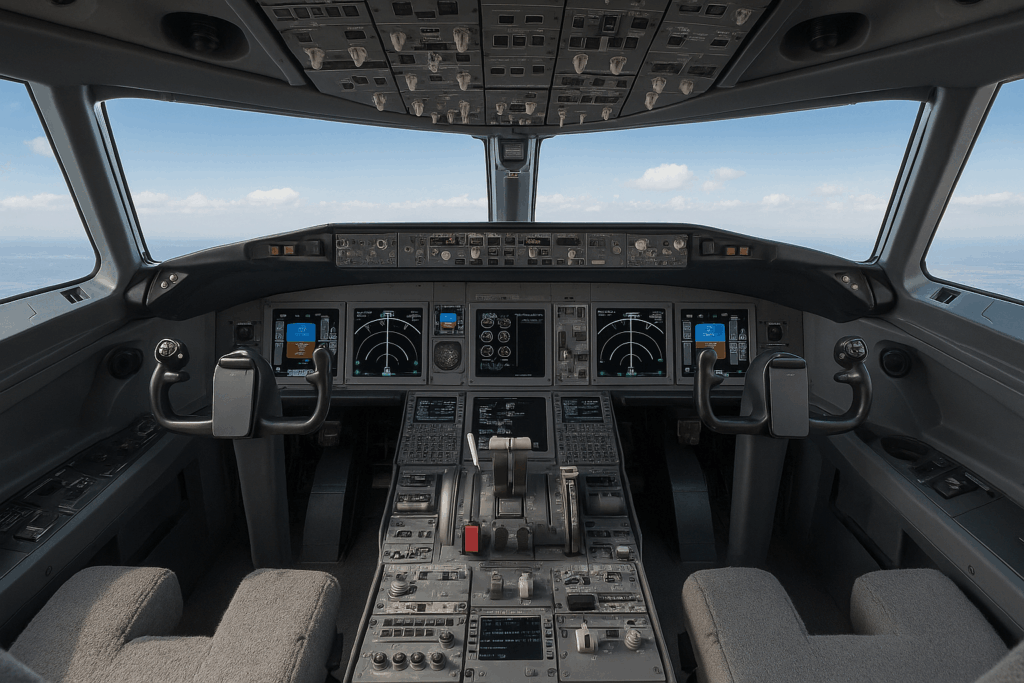
6. Cockpit / Flight Deck
The cockpit is where pilots control the airplane. It contains all the instruments and controls needed to operate the aircraft.
Main instruments include:
- Altimeter (altitude)
- Airspeed Indicator
- Attitude Indicator
- Compass / Heading Indicator
- Engine and fuel gauges
- Control yoke, pedals, and throttle
Modern airliners use glass cockpits with digital screens (EFIS).

7. Control Surfaces – The Maneuvering Parts
| Control Surface | Location | Movement Controlled |
|---|---|---|
| Ailerons | Outer wings | Roll |
| Elevators | Horizontal tail | Pitch |
| Rudder | Vertical tail | Yaw |
| Flaps | Wing trailing edge | Lift & drag (takeoff/landing) |
| Slats | Wing leading edge | Increases lift (takeoff/landing) |
These movable surfaces are operated by mechanical linkages, hydraulics, or fly-by-wire systems.

Conclusion
Every part of an airplane is designed for a specific aerodynamic purpose—to generate lift, control stability, reduce drag, or provide thrust. Together, these systems make flight possible, safe, and efficient.
Whether you’re a student, aviation enthusiast, or aspiring aerospace engineer, understanding the anatomy of an airplane is the foundation for exploring aerodynamics, propulsion, and aircraft design.
Be the first to post a comment.